Persian hospitality taarof as the quiet engine of luxury service
Walk into a marble lobby in Iran and Persian hospitality taarof starts working before you say a word. The choreography between the front desk, the bell staff and the concierge is not random hospitality theatre; it is a structured ritual in which the host and guest test each other’s understanding of Iranian culture and etiquette. If you read this form of taarof as mere charm, you will miss how much it literally shapes your stay, the room you are quietly offered and the invitations you receive as a guest.
Taarof is a Persian form of ritual politeness, and in luxury hotels across Iran it becomes a kind of operating system. The rules Iranian people follow here are old, but they are not nostalgic; they are a living art of etiquette that still governs who sits where, who pays when and which room key appears on the counter. Persian hospitality in this context is not just warm service, it is a calibrated exchange in which people signal status, intent and respect through polite gestures and carefully timed refusals that may sound polite on the surface but carry deeper meaning in Persian culture.
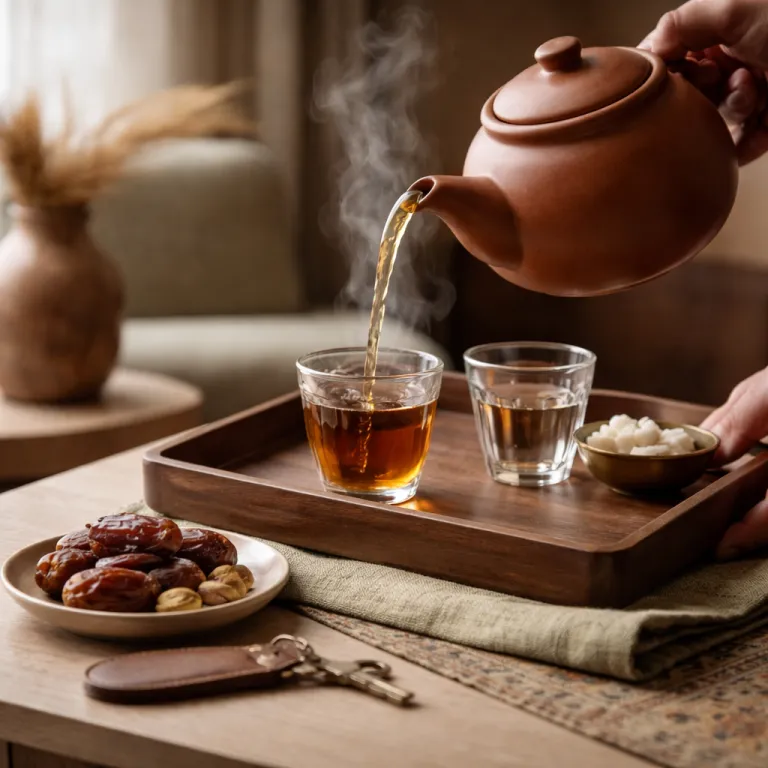
At check in, the first round of taarof politeness usually arrives with the welcome tea tray. Staff will offer to upgrade, to arrange a late checkout or to handle your luggage in a way that sounds almost too generous, and many Iranians will instinctively decline politely once or twice before they accept. For an international guest, understanding that this is not a sales pitch but a ritualised offer means you can accept or decline host gestures without sounding impolite or greedy, and you can read the form of taarof as part of the service rather than a confusing script.
Behind the desk, Iranian staff are reading you as closely as you are reading them. When you initially say “no, thank you” to a small privilege and then accept after a second offer, you are showing respect for Persian culture while still allowing the host to be generous. Over time, this dance tells the team whether you are the kind of guest who might appreciate an unlisted courtyard suite, a quieter table at dinner or an introduction to a friend simply known as “the carpet man” who deals in serious Persian art and knows how to guide people who want to explore Iran through its crafts.
Anthropologists who study social etiquette in Iran often summarise taarof in one simple sequence of advice: “Politely refuse offers initially. Accept after insistence. Understand it is cultural.” Those three sentences describe what every seasoned concierge in Iranian luxury properties already knows about taarof politeness and its impact on hospitality. When you align with this rhythm, you are no longer just a foreigner in Iran; you are participating in a shared culture that values humility as much as comfort and sees showing respect as part of the luxury experience.
From courtyard to concierge desk: how cultural heritage revivals shape taarof
Across Iran, a new generation of luxury and premium hotels is restoring caravanserais, garden houses and Qajar mansions, and Persian hospitality taarof is being rewoven into their service scripts. These properties are not simply polishing stucco and reviving Persian art on the walls; they are reviving the deeper etiquette that once governed how a host welcomed a caravan leader or a poet into the house. For travelers who want to explore Iran through its living culture, this is where Iranian culture stops being abstract and becomes the texture of every interaction with staff and other guests.
In Isfahan, Shiraz and Kashan, you see this when staff guide you through a courtyard framed by stucco muqarnas and tiled iwans before they even mention your room number. The walk itself is a polite gesture, a way of showing respect by letting the guest arrive in stages, and it echoes older rules Iranian families followed when receiving important visitors. When you read about cultural heritage revivals shaping luxury experiences in Iran, you are really reading about how taarof politeness is being translated into modern hospitality rather than replaced by generic international etiquette.
Many of the most interesting properties featured in cultural heritage revivals for luxury hotel booking in Iran now train their équipes in the art of etiquette as carefully as they train them in wine service or spa protocols. At Tehran’s Parsian International Hotel training centre, for example, instructors describe taarof as “a professional competency as important as language skills or technical service training,” and a front office manager in Shiraz might brief staff on when to offer a room change, how many times to insist on carrying a bag, and when to accept decline from a guest who truly wants privacy. This is Persian hospitality as a craft, not a script, and it depends on Iranian people who can read subtle cues in tone and timing and adjust their offers in real time.
For solo travelers using a curated platform like myiranstay.com, this matters because the booking interface rarely shows the full cultural layer. The photos may highlight arches and pools, but the real luxury is in how the team handles that moment when you decline host assistance and they decide whether to insist or step back. Articles on cultural heritage revivals shaping luxury and premium hotel booking experiences in Iran explain why a restored mansion with a trained taarof culture can feel more refined than a newer glass tower with generic international etiquette and no deep understanding of local rules Iranian families still follow at home.
When you choose a property that has invested in both architecture and the form of taarof, you are buying into a complete Persian culture experience rather than a themed backdrop. Over several days, the way staff offer tea, arrange taxis and manage the food offered at breakfast will tell you more about Iranian culture than any museum label. In this sense, Persian hospitality taarof is not a nostalgic add on; it is the mechanism through which cultural heritage revivals become tangible for people who sleep, eat and negotiate their time inside these walls.
Reading the unspoken menu: arrival, tea and dinner through the lens of taarof
The most refined hotels in Iran treat arrival as a three act play in which Persian hospitality taarof sets the pace. First comes the greeting at the door, where the host may insist on taking every bag while you, trying to sound polite, attempt to carry at least one yourself. Then the lobby seating and tea service follow, and this is where the art of etiquette becomes very clear to anyone paying attention to the timing of each offer.
When the samovar appears, you will often be invited to sit “just for a moment” while your documents are prepared, even if the desk is obviously free. Many Iranians will initially decline politely, saying they do not want to take the staff’s time, and the team will insist once or twice before the guest accepts and settles into the sofa. This small exchange is a distilled form of taarof politeness, and it tells the staff whether you understand that the offer is genuine and that accepting it is part of showing respect within Iranian culture.
The same pattern repeats at dinner in a hotel restaurant overlooking a courtyard or a city skyline. You may be offered a table with a view and, if you hesitate, the maître d’ will reassure you that it is “no trouble at all” while quietly holding another table in reserve for a late arriving regular. Iranian culture has long used seating order and food offered as signals of status, and in a luxury setting this becomes a subtle negotiation between guest expectations and house rules Iranian teams still follow when they decide who sits where and when.
For a solo explorer, the key is to understand when to accept decline as final and when to let the host insist. If you truly do not want dessert or a second glass of tea, you may need to decline politely more than once so that the staff can be sure they are not failing in their duty of hospitality. Over time, this back and forth creates a shared language between you and the Iranian people serving you, and it often leads to small, unlisted privileges such as a taste of a family recipe or a late night tour of the rooftop terrace that you would never see on a printed menu.
Even outside the hotel, the same logic applies when you deal with taxi drivers, shopkeepers or a friend simply met in the lobby who offers to show you a nearby mosque. In Iran, taxi drivers might initially refuse your payment or insist the ride is “on them”, and Iranians know that this is often a ritualised offer rather than a literal refusal of money. Learning when to accept, when to insist and when to let the other person win is part of exploring Iran with cultural fluency, and it makes every interaction feel less transactional and more like shared Persian culture.
Practical taarof toolkit for solo luxury travelers in Iran
To move confidently through Iranian luxury hotels, you need a small, practical toolkit for Persian hospitality taarof rather than a full language course. Start with the principle that offers are often made more than once, and that people expect you to refuse once before you accept, especially when the offer seems generous. This pattern holds whether the host is a general manager proposing a late checkout, a concierge arranging a driver or a housekeeper insisting that you take more food offered from the breakfast buffet.
When you check in, a simple strategy is to decline host upgrades or extras once, then accept if they are offered again with clear insistence. This shows you understand the form taarof takes in daily life without turning the interaction into a negotiation over every small privilege, and it allows the staff to feel they are showing respect properly. Over time, this behaviour signals that you are a considerate guest, and Iranian people in service roles often respond with more candid advice, from which restaurant is truly worth your time to which wing of the property has the quietest rooms.
A few phrases help, even if your pronunciation is imperfect, because they show engagement with Iranian culture rather than distance. Pair those phrases with attentive body language, such as standing up when an older staff member approaches or pausing to listen fully when a concierge explains house rules Iranian families would recognise from their own homes. These polite gestures are small, but in the context of Persian hospitality they can literally change how staff prioritise your requests over the course of a stay and how many informal offers you receive.
On myiranstay.com, we often highlight properties where the team’s mastery of taarof politeness is as strong as their design credentials, especially in pieces such as an elegant stay by Naqsh-e Jahan Square in Isfahan. In these hotels, the unspoken menu can include things like access to a private library, a courtyard reserved for evening tea or an introduction to a local guide who does not advertise online. You will not see these offers on any booking engine, but they appear naturally when staff sense that you understand and respect the Persian culture framework they operate within and the etiquette that shapes each interaction.
Ultimately, Persian hospitality taarof is not a barrier for Western travelers; it is an invitation to engage more deeply with Iranian culture while enjoying some of the region’s most refined hotels. A traveler who treats it as a living art of etiquette rather than a quirk will often be offered experiences that never appear on the printed menu, from a spontaneous poetry reading in a restored salon to a late night tea with the owner’s family. Accept that invitation thoughtfully, and Iran will feel less like a destination you visited once and more like a culture you were briefly allowed to inhabit.
Key figures on Iranian hospitality and cultural travel
- According to public statements from Iran’s Ministry of Cultural Heritage, Tourism and Handicrafts, international tourist arrivals have recovered to several million visitors per year in recent reporting, with a significant share choosing heritage style hotels that foreground Persian hospitality and traditional etiquette. Exact figures vary by source and year, so travelers should consult the latest ministry releases for current numbers.
- UNESCO lists more than a dozen cultural and natural World Heritage Sites in Iran, including Naqsh-e Jahan Square in Isfahan and the historic city of Yazd, and many luxury and premium hotels cluster within a short distance of these sites, reinforcing the link between cultural heritage revivals and high end hospitality experiences. The precise count changes as new sites are inscribed, but the concentration remains notable.
- Global surveys by organisations such as the UN World Tourism Organization consistently show that cultural and heritage motivations account for a substantial share of international travel decisions, often approaching or exceeding two fifths of trips. This broad trend aligns with the rise of restored caravanserais and historic mansions in Iran’s luxury hotel sector.
- Industry commentary from hoteliers in Tehran, Isfahan and Shiraz suggests that heritage focused luxury properties frequently achieve higher occupancy than non heritage competitors, indicating that travelers actively seek experiences shaped by Iranian culture and taarof based service. Specific percentages vary by city, season and reporting method, so these comparisons should be read as indicative rather than definitive.
- Training programmes in major Iranian hotel schools now dedicate multiple modules to social etiquette and taarof, reflecting recognition that ritual politeness and showing respect are core skills for staff in five star environments. In interviews, instructors describe taarof as “a professional competency as important as language skills or technical service training,” and they emphasise that understanding when guests accept decline or insist on privacy is central to modern Persian hospitality.