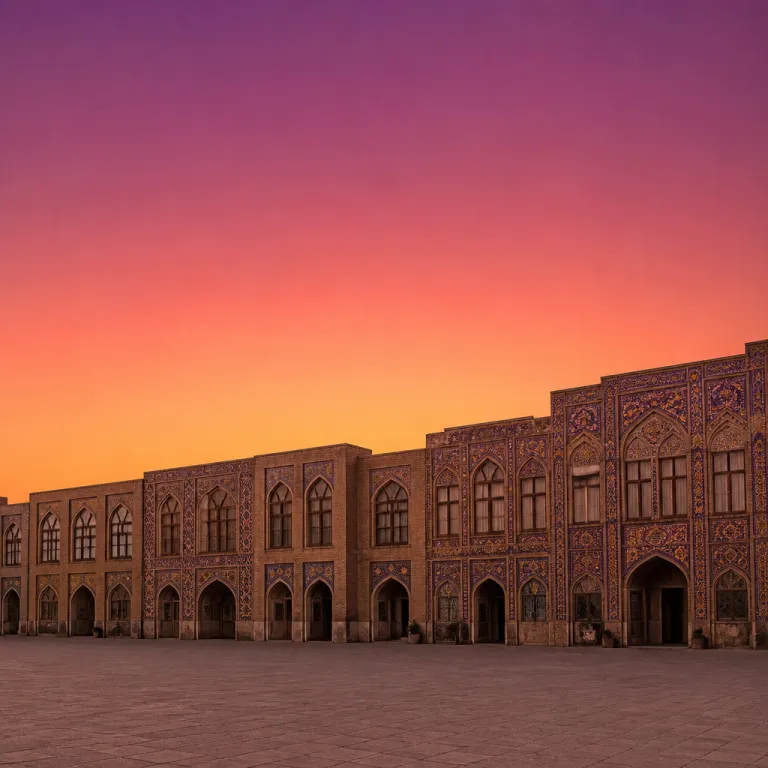
Reading isfahan hotel architecture tilework before you even check in
Arriving in Isfahan, your first real welcome often happens on the street. Before a single key card changes hands, the tiled facades of Isfahan’s hotels are already telling you how this city understands beauty and time. In Iran, a hotel frontage can read like a manuscript, where every band of tiles, every dome silhouette and every line of calligraphy quietly signals its place in Persian architectural history.
Think of the best properties in Isfahan as translators between mosque and hotel, between palace and guestroom. The same visual language that shapes a mosque in Isfahan, a Safavid palace in the historic city core or a Qajar period merchant house now turned into a luxury stay is carefully edited for contemporary comfort. When you stand in front of a tiled entrance, you are reading a condensed version of Persian architecture, from Seljuk geometry to Safavid dynasty exuberance and later Qajar period narrative panels.
Isfahan's hotel facades act as narrators that depict Persian history through tilework. Local architects and artisans in Iran often work with cultural historians and the Isfahan Cultural Heritage, Handicrafts and Tourism Department to ensure that new design choices respect the surrounding Islamic architecture and the nearby mosque located on almost every major square. This is why the most interesting hotels feel in dialogue with Sheikh Lotfollah Mosque, Chehel Sotoun Palace and the wider Naqsh-e Jahan Square ensemble rather than simply borrowing motifs as surface decoration.
From Seljuk geometry to safavid gardens: what patterns say about your stay
Learning to read Isfahan hotel architecture tilework starts with understanding three major visual eras. Seljuk inspired facades lean into strict geometry, cool blue and turquoise tiles and a disciplined grid that echoes early mosque Isfahan monuments and their mathematically precise domes. Safavid dynasty references, by contrast, bring in floral arabesques, garden motifs and the polychrome haft rang technique that turned Naqsh-e Jahan Square into one of the most celebrated ensembles of Islamic architecture anywhere in Iran.
Haft Rang, literally "seven colors", is the painted tile technique that allowed Safavid artists to compose large narrative surfaces quickly. When a hotel in the historic city core uses Haft Rang tiles around its entrance hall or courtyard, it is aligning itself with the same visual logic that shapes the Shah Abbas era Shah Mosque and the intimate Sheikh Lotfollah Mosque located on the eastern side of Jahan Square. The question "What is Haft Rang tile?" is answered simply in local training sessions for hoteliers as "A seven-colored tile technique used in Persian architecture," a definition that echoes descriptions in the National Museum of Iran’s ceramic collections.
Later Qajar period influences introduce figurative panels, European style landscapes and more playful colorful tiles, which you will often see in smaller palace Isfahan conversions or in wings added to older properties. Couples who time their visit for the soft light and empty courtyards of what many consider Iran's most civilised travel window will find these details especially legible during long golden hour walks; for deeper context on seasonal ambience, see our guide to roses, light and quiet courtyards in Isfahan and beyond. Once you start noticing how each design era handles blue, floral motifs and calligraphy, you will never look at a tiled hotel facade in the same way again.
Moarraq versus haft rang: technical clues hidden in hotel facades
Not all Isfahan hotel architecture tilework is created with the same technique, and understanding the difference changes how you read a facade. Cut tile mosaic, known as moarraq, uses individually shaped tiles assembled like a stone carpet, while Haft Rang relies on painting multiple colors onto a single tile before firing. In practice, moarraq tends to appear in more formal settings such as mosque portals, palace iwans and the most ceremonial hotel entrances, whereas Haft Rang is often used for faster coverage on upper walls, domes and long corridors.
Stand in front of the Abbasi Hotel, widely regarded as the reference point for tilework in Isfahan, and you can see both traditions in dialogue. Restoration teams documented by the Iranian Cultural Heritage, Handicrafts and Tourism Organization in the late 20th century have used glazed brick, moarraq panels and Haft Rang tiles to maintain continuity with nearby Safavid monuments such as Chehel Sotoun Palace and the Shah Abbas mosque complex, while still meeting modern hospitality standards. When you read that "Abbasi Hotel is renowned for its intricate tilework" in local tourism literature, it is this layered combination of techniques, not just the quantity of tiles, that earns the praise.
For travelers comparing properties on MyIranStay, these technical distinctions become a practical filter rather than an abstract art history lesson. Our in depth property analyses, such as the framework outlined in how to read a Persian property beyond the standard star rating, treat tilework as a core indicator of architectural seriousness. A hotel that invests in authentic moarraq panels, respects original Safavid or Qajar period proportions and collaborates with qualified artisans is usually also the one that gets service training, lighting and acoustic comfort right.
Living inside the narrative: how hotels turn tilework into guest experience
The most rewarding encounters with Isfahan hotel architecture tilework happen not on the facade but in the spaces you inhabit for hours. A breakfast hall lined with deep blue tiles that echo Sheikh Lotfollah Mosque, a stairwell whose muqarnas recalls the entrance to Chehel Sotoun, or a quiet lounge where columns and arches frame a view toward Naqsh-e Jahan Square all turn abstract heritage into lived experience. In these settings, Persian tilework is not a backdrop for selfies but a daily companion to your coffee, your reading and your conversations.
Many of Isfahan's top properties now design guest journeys that consciously mirror the rhythm of the surrounding city. You might start the day under a tiled dome in a hotel courtyard, continue through Jahan Square past the mosque located on its southern edge, pause at the intimate Lotfollah Mosque and then return to a room whose headboard pattern subtly quotes the same Safavid arabesques. Our editors pay close attention to how hotels choreograph this movement between heritage site and private space, because it reveals whether the architecture is treated as living art or frozen décor.
Evening is when the narrative softens and the tiles shift character under warm light. Couples who value atmosphere should look for properties that extend their tiled courtyards into dining concepts, where the reflection of colorful tiles in shallow pools recalls the gardens of Sotoun Palace and other palace Isfahan complexes; for a broader perspective on this garden culture, explore our feature on summer evenings in Persian garden hotels. In these moments, the line between mosque, palace and hotel blurs, and you feel part of a continuous story of Persian architecture and hospitality.
Preservation, regulation and choosing the right tiled address in isfahan
Turning a centuries old structure into a luxury hotel in Iran is never just a design exercise. In Isfahan's historic city core, any serious project that touches traditional hotel tilework must negotiate with heritage authorities, structural engineers and artisans who understand how a 500 year old wall actually behaves. The goal is to balance modern expectations for climate control, soundproofing and generous bathrooms with the structural limits of domes, columns and vaulted halls built long before such comforts existed.
Properties near Naqsh-e Jahan Square and other UNESCO heritage zones face especially strict guidelines. The square was inscribed on the World Heritage List in 1979, and municipal regulations issued in the early 1980s make clear that hotel owners cannot simply punch new windows through tiled walls that visually align with Sheikh Lotfollah Mosque, Chehel Sotoun or other mosque Isfahan landmarks without risking both fines and reputational damage. Instead, the most thoughtful projects work with existing rhythms of the architecture, inserting discreet services behind thick walls and using reversible interventions so that future generations can still read the original Safavid or Qajar period fabric.
For travelers, this regulatory landscape becomes a useful proxy for quality when planning tours in Iran that include Isfahan. A hotel that advertises proximity to a heritage site but shows clumsy, over bright tiles, generic blue patterns and awkwardly scaled arches in its photos is usually signalling a superficial relationship to Persian art and design. By contrast, when you see restrained facades, carefully restored colorful tiles that resonate with nearby mosque and palace complexes, and public spaces that feel proportionally at ease, you are likely looking at a property where architecture, service and narrative are aligned.
FAQ
How old is the tilework tradition visible on Isfahan hotel facades ?
The tilework tradition that shapes many Isfahan hotel facades has roots going back more than seven centuries. Historical records for the city mention glazed brick and early tile techniques from the 13th century, and this lineage continues through Safavid dynasty masterpieces and Qajar period renovations. When you stay in a converted caravanserai or palace, you are often sleeping within walls that have carried Persian tilework for hundreds of years.
Which Isfahan hotel is best known for its historical tilework ?
Abbasi Hotel is widely recognised as the flagship address for historical tilework in Isfahan. The property occupies a former Safavid caravanserai and integrates restored moarraq mosaics, Haft Rang panels and glazed brick details that echo nearby monuments such as Chehel Sotoun and the Shah Abbas mosque complex. Many architectural tours in Iran include a stop here specifically to study how a luxury hotel can function as a living museum of Persian architecture.
What is the difference between moarraq and Haft Rang tiles in hotels ?
Moarraq refers to cut tile mosaic, where each piece is individually shaped and assembled like a puzzle, while Haft Rang uses a painting technique that applies several colors onto a single tile before firing. In Isfahan hotels, moarraq is typically reserved for high impact areas such as main entrances, iwans or prayer rooms, where precision and depth matter most. Haft Rang appears more often on large wall surfaces, domes and corridors, allowing designers to create expansive scenes and floral patterns efficiently.
How does Naqsh-e Jahan Square influence hotel design in Isfahan ?
Naqsh-e Jahan Square, recognised as a UNESCO heritage ensemble, sets the visual benchmark for many nearby hotels. Its combination of the Shah Mosque, Sheikh Lotfollah Mosque, Ali Qapu Palace and surrounding arcades establishes a vocabulary of blue tiles, domes, arches and calligraphy that designers echo in contemporary properties. When you book a hotel within walking distance of the square, you will often find that the facade and courtyard proportions consciously reference this Safavid urban masterpiece.
Can I explore mosque and palace tilework easily from my hotel in Isfahan ?
Most luxury and premium hotels in central Isfahan are within a short walk or taxi ride of major tilework landmarks. From many properties, you can design a simple route that links your hotel facade to Naqsh-e Jahan Square, Sheikh Lotfollah Mosque, the Shah Mosque and Chehel Sotoun Palace in a single morning. This proximity allows you to compare the tilework you see in religious and royal settings with the patterns and colors that welcome you back to your room.