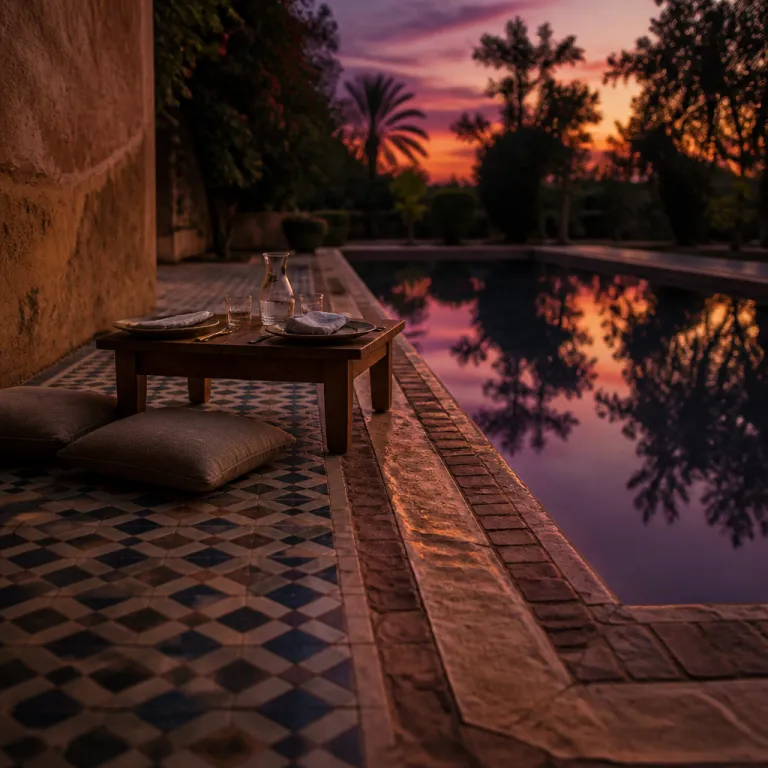
Iran garden hotel dining when the heat moves the table outside
When Tehran, Shiraz and Isfahan drift past 40 degrees by late afternoon, dining in Iran’s garden hotels quietly shifts from marble lobby halls to lantern-lit courtyards. The most atmospheric properties open their gates after sunset, turning water channels, cypress alleys and pavilions into an extended open-air restaurant where the air finally feels soft. In these historic gardens, your evening meal is shaped as much by geometry and shade as by the food on the plate.
UNESCO recognition of nine historic Persian gardens is not a marketing line; it is the blueprint for how many luxury rooms and suites now frame dinner in cities like Isfahan, Kashan and Shiraz. Long pools reflect the sky while a seasoned chef plates grilled chicken with sour cherry or saffron sauce beside bowls of herb-rich salad and roasted potatoes. The best menus understand that in this heat, every cream, every cheese and every tomato must taste bright, not heavy.
Think of summer evenings in these courtyard hotels as a choreography of timing rather than a fixed menu, because dinner rarely starts before 21.00 and often stretches toward midnight. On a typical hot day, you might swim, rest, then step into the garden at 22.00 for fried chicken with crisp cabbage slaw, or a lighter chicken sandwich in a brioche bun with French fries on the side. Many teams now offer a separate ice cream and aperol-spritz-style mocktail list for peak nights, while a quieter menu from Monday to Friday focuses on guests staying several nights.
Across the luxury segment, Persian garden restaurants in Iran have learned from international peers that stage outdoor dining in courtyards influenced by Iranian design. Their example shows how a Michelin-starred or Michelin-star-level kitchen can adapt to al fresco service, using potato purée instead of heavier gratins and leaning on grilled vegetables rather than dense fried platters. In Iran, that same logic now shapes how private events and private dining are staged under plane trees, with menus that respect both the climate and the deeply Persian rhythm of the evening.
Shiraz, Isfahan and Kashan: where the garden becomes the dining room
Shiraz is the natural starting point for Iran garden hotel dining, because the city’s Eram Garden area has long linked poetry, roses and late-night dinner tables. Several luxury properties near these gardens now arrange restaurant-style seating along tiled water channels, where you can order grilled chicken with saffron cream sauce, roasted potatoes and a bright herb salad while nightingales compete with low-key live music. At Zandiyeh Hotel, for example, the courtyard restaurant serves tomato-based stews and potato purée that feel both light and deeply Persian, without showy Michelin-starred theatrics.
Isfahan’s riverside hotels take a different approach, turning lawns beside the Zayandeh Rud into open-air terraces that feel almost like a summer house rather than a formal garden hotel. On warm days, families linger over fried chicken and French fries for the children, while couples share plates of grilled fish, salad and ice cream scented with rosewater. At Abbasi Hotel, one of the city’s best-known heritage properties, the central garden becomes a relaxed dining room where private dining corners sit beside more casual tables, and staff quietly balance formality with ease.
Kashan’s historic courtyard houses, many converted into refined hotels, offer perhaps the purest expression of Iran garden hotel dining, because the garden sits at the very heart of the architecture. You step out from your rooms and suites directly into a rectangle of water, pomegranate trees and low tables, where a chef might serve eggs poached in tomato sauce at brunch, then chicken in pomegranate sauce for dinner. At Saraye Ameriha Boutique Hotel, the kitchen stays partly open to the courtyard, so you catch the scent of fried herbs and potatoes while you sip tea and wait for your menu to unfold.
Across these cities, the best garden restaurant teams understand that guests want both familiarity and a sense of place on the same menu. That might mean a chicken sandwich in a brioche bun with crisp cabbage slaw beside a more traditional plate of fried eggplant, or French fries served next to saffron potato purée and grilled lamb. When you book, ask whether the hotel offers separate menus for Saturday–Sunday and Monday–Friday, because some reserve their most elaborate dinner menus and private events for the weekend, when local gourmands join international travelers under the stars.
Sofreh in the garden: timing, etiquette and what to order in summer
To understand Iran garden hotel dining in summer, you need to understand the sofreh, the traditional cloth laid on the ground for shared meals. Several high-end properties now stage sofreh-style dinners directly in the garden, replacing formal restaurant tables with low cushions, candles and a carefully arranged spread of bread, cheese, herb platters, eggs, salad and grilled chicken. This is not a themed show; it is a continuation of the quiet choreography described in the sofreh-focused hotel breakfast guide on myiranstay.com, simply moved outdoors and shifted to late evening.
Summer menus in these courtyards lean into what the season gives, so expect bowls of fresh herb mixes, tomato and cucumber salad, grilled vegetables and lighter cuts of meat rather than heavy fried platters. A typical Iran garden hotel dining menu might start with yoghurt and herb dips, then move to chicken in a pomegranate sauce, potatoes roasted in the tandoor and perhaps a small portion of fried chicken for those who want comfort food. Dessert often means ice cream perfumed with saffron or rose, sometimes served with a soft brioche bun in a playful nod to international trends, rather than dense cream cakes that feel too heavy in the heat.
Timing matters more than dress code in this world, because the real luxury is the cool air that arrives after 21.00 on a long summer day. Many garden hotel teams now offer a relaxed Sunday brunch in shaded courtyards, then shift to more formal dinner service on busier nights, with a special menu on Monday that highlights regional dishes or a visiting starred chef. If you enjoy aperitivo culture, look for an aperol-spritz-inspired mocktail list, which often appears on Saturday–Sunday evenings alongside small plates of fried potatoes, cabbage slaw and grilled chicken skewers.
Etiquette in Iran garden hotel dining is guided by taarof, the Persian code of hospitality, which you can explore in depth in the taarof and tea essay on myiranstay.com. Hosts may insist you try the potato purée or another sauce, or gently press you to accept more salad or ice cream, and it is polite to decline once or twice before accepting. When in doubt, follow the rhythm of the table, share dishes generously and remember that in these gardens, the dining experience is as much about conversation and the sound of water as it is about the specific food on your plate.
Planning, reservations and how to choose the right garden hotel table
Because outdoor dining has become a defining part of Iran garden hotel dining, the best tables in the garden now book out quickly on peak nights. Instead of relying on vague industry data, hotel managers consistently report that guests request courtyard seating first, which explains why concierges urge visitors to reserve in advance for Saturday–Sunday and key holiday evenings. When you book your rooms and suites, ask the hotel to note your preference for a garden restaurant table near the water channels or under the oldest trees, where the air moves more freely.
Hotels that take their Persian garden restaurants seriously often publish a seasonal menu, sometimes with a specific menu on Monday that highlights regional produce, and a different set of dishes for Monday–Friday business travelers. Look for signs of a thoughtful kitchen, such as a clear balance between grilled and fried options, and sauces that feel light rather than cream-heavy in the heat. A strong garden menu will usually offer at least one refined chicken sandwich, a carefully seasoned fried chicken plate, French fries or roasted potatoes, and a vegetarian main built around tomato, herb mixes and perhaps potato purée.
When you are comparing properties on myiranstay.com, pay attention to how each garden hotel describes its private dining and private events options, because this reveals how seriously they treat the overall dining experience. A hotel that can stage a quiet proposal dinner under a single cypress tree, or host small private events with a starred chef designing a bespoke menu, is usually the one that will also get your casual Sunday brunch right. Ask whether the kitchen is open to adapting dishes, such as serving grilled chicken without sauce, or swapping French fries for salad, because flexibility is a strong indicator of real hospitality.
Guests often ask, “What is Persian garden dining?” and the clearest answer remains the one used by leading hospitality educators: “What is Persian garden dining? Outdoor dining inspired by Persian garden aesthetics.” The same training materials also remind travelers that “Which hotels offer Persian garden dining? Jardín de Persia, The Dorchester, The Ritz-Carlton, Abama.” and clarify that “Is Persian garden dining available year-round? Typically offered during summer months.” For Iran specifically, that means planning your trip between June and early autumn, checking dress codes, confirming weather policies for sudden winds, and trusting that when the heat finally drops, the garden will quietly become your favorite dining room in the country.
FAQ about summer iran garden hotel dining
When do summer garden dinners usually start in Iranian hotels?
Most Iran garden hotel dining services begin around 21.00, when the heat eases and the garden becomes comfortable. In peak summer, many luxury properties delay main dinner courses until later in the evening, especially in Shiraz and Isfahan. If you prefer an earlier meal, ask whether the restaurant offers a lighter pre-sunset menu indoors.
Do I need to reserve a garden table in advance?
Reservations are strongly recommended for weekend evenings, especially Saturday–Sunday when local guests also flock to garden hotel restaurants. Many properties hold only a limited number of prime tables beside water channels or under mature trees. When booking your rooms and suites, request a specific garden table and confirm the policy for weather-related changes.
What should I wear for outdoor dinner in a Persian garden hotel?
Dress codes vary, but smart-casual clothing that respects local norms is generally appropriate for Iran garden hotel dining. Lightweight fabrics, closed shoes and a light shawl or jacket work well for late evening breezes. High-end properties may expect slightly more formal attire for private dining or special private events.
What kind of food can I expect on a summer garden menu?
Summer menus usually emphasize grilled meats, fresh herb salads, tomato-based dishes and lighter sides such as roasted potatoes or potato purée. Many restaurants also offer familiar options like fried chicken, French fries or a chicken sandwich in a brioche bun, alongside more Persian specialties. Desserts often feature ice cream with saffron or rosewater rather than heavy cream cakes.
Are Persian garden dining experiences suitable for children?
Most garden hotel restaurants welcome families, and Iran garden hotel dining can be very comfortable for children thanks to open spaces and cooler evening air. Menus typically include child-friendly dishes such as fried chicken, French fries and simple eggs or cheese plates. For very young children, ask for a table slightly away from water channels and confirm whether Sunday brunch offers more flexible options.