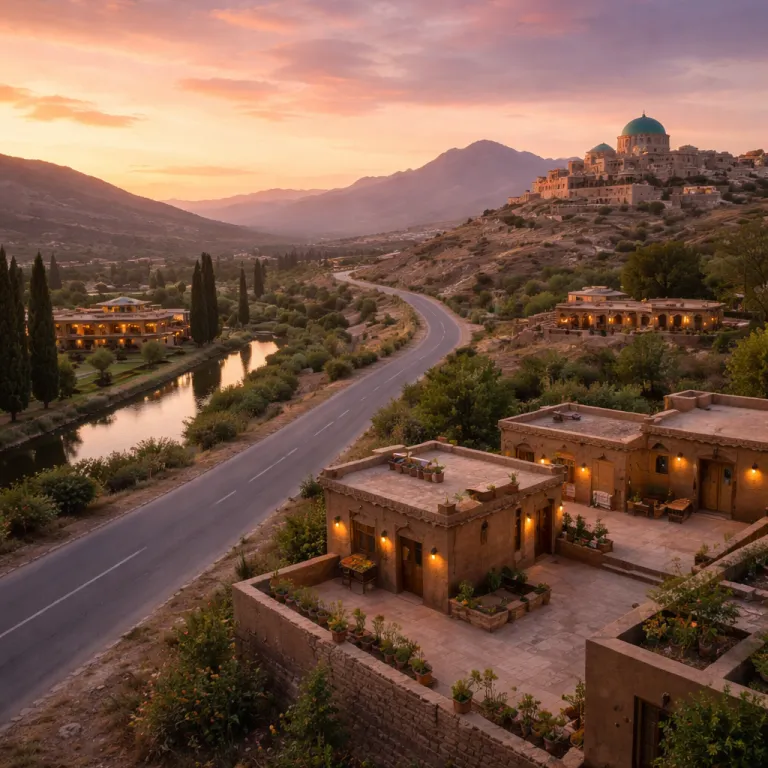
Slow itineraries in Iran change what luxury means
Slow travel in Iran begins with a simple decision about time. Instead of racing through the country on a fast paced circuit, you choose to travel slow and let one city hold you for several days. That single choice will change how you meet people, how you read Persian spaces and how every hotel stay feels.
The classic Tehran–Isfahan–Shiraz route, sometimes with Yazd or Kashan added, is efficient for traveling Iran but it flattens the country into a checklist of places to visit. Most tour catalogues still sell this as the default way to travel Iran, yet the finest heritage properties in each city are quietly built for guests who spend days, not hours. When you treat Iran as a country to cross quickly, you miss the slow rituals that define Iranian hospitality and you reduce extraordinary hotels to mere beds between transfers.
Slow travel Iran asks you to trade breadth for depth and to accept that you will not see every desert, every shrine, every city. In return, Iran will offer you layered conversations with local hosts, unhurried evenings in traditional houses and a sense of how daily life actually unfolds. This is where a luxury and premium booking strategy matters, because the right property in Isfahan or Shiraz becomes your cultural anchor rather than just another stop on a long trip.
Think of Isfahan, Shiraz and Yazd not as a string of cities to tick off, but as three distinct stages in a narrative about an Iran country that has been welcoming travelers since the Achaemenid Empire. In Isfahan, a courtyard hotel near Naqsh e Jahan Square lets you walk the same route at different times of day and notice how the light, the crowds and the call to prayer reshape the city. In Shiraz, a restored mansion with carved wooden ceilings invites you to travel slow by lingering over breakfast tea while staff share stories about poets, gardens and the best places visit nearby.
Slow travel is often defined, in sustainable tourism research and by organisations such as the UN World Tourism Organization, as travel focusing on deep cultural immersion and lower impact practices. That definition matters in Iran because the country still has a strong network of local families and nomadic tribes who host guests in traditional houses, eco lodges and seasonal camps. When you choose to travel slow in Iran, you support these people directly and you give yourself the time needed to understand how Iranian hospitality works beyond the hotel lobby.
Luxury travelers sometimes argue that they want to see as many countries travel through a region as possible in one long holiday. Yet Iran best rewards those who accept that one country, explored slowly, can feel as rich as several rushed passports stamps. A slow itinerary across this country will not only reduce internal flights and long drives, it will also align with the growing interest in sustainable tourism and cultural immersion that shapes high end travel worldwide.
For solo explorers, the question is not whether traveling Iran is possible in ten days, but whether that kind of trip will feel meaningful. A slower approach lets staff in your chosen city begin to recognise you, recommend local experiences and quietly adjust service to your rhythm. Over time, your luxury hotel becomes a familiar base where you can return from the bazaar, the desert or a long walk and feel that the city is starting to hold you, not push you onward.
The four night threshold in Isfahan and the art of staying put
Isfahan is where slow travel Iran proves its value most clearly. Two nights in the city will give you the postcard views of Naqsh e Jahan Square, the bridges and a quick tour of mosques, but it will not reveal how the city breathes. The fourth night is when patterns emerge, when you will find that the same local baker nods in recognition and the same carpet merchant waves you in for tea without mentioning a sale.
Luxury hotels around Jahan Square and along the old caravan routes are designed around courtyards, arcades and tea spaces that only make sense when guests travel slow. These properties are not built for a fast paced coach tour that arrives late and leaves early; they are built for travelers who spend days reading, talking and watching the light move across Safavid tilework. When you stay four nights instead of two, staff have time to learn your preferences and to suggest places visit that never appear on standard itineraries.
Slow travel in this city also changes how you experience Iranian art and architecture. On the first day, the scale of Naqsh e Jahan Square and the detail of the mosques can feel overwhelming, but by the third or fourth day you start to notice the rhythm of arches, the geometry of domes and the way Persian calligraphy frames every doorway. That is when a luxury hotel with strong cultural programming becomes invaluable, because a concierge who understands travel Iran can connect you with local guides, workshops and evening events that match your interests.
From a booking perspective, committing to four nights in Isfahan means choosing a property that rewards time rather than turnover. Look for hotels that offer in house talks on the Achaemenid Empire and later dynasties, or that arrange small group visits to artisans rather than only large bus tours. These are the places where traveling Iran feels less like a packaged tour and more like a residency in a living museum city.
Slow travel also aligns with the revival of cultural heritage in Iran’s high end hospitality sector. Many of the most interesting luxury properties are restored caravanserais and traditional houses that have been converted into intimate hotels with a focus on craftsmanship, and you can explore how these cultural heritage revivals are shaping luxury booking choices in Iran through this detailed guide to heritage led stays. When you give these spaces time, you see how the architecture, the service rituals and even the breakfast menu are designed to tell a story about the city and the wider country.
Some travelers worry that spending so long in one city will feel limiting, especially on a first trip to Iran. In practice, the opposite happens; by the third day you have the confidence to explore local neighbourhoods beyond the main sights, to take a bus or metro across town or to accept an invitation from people you meet in a park or a café. That kind of unscripted experience is almost impossible on a tight tour schedule where every hour is allocated to a different city.
Slow travel Iran also changes how you use your hotel room and shared spaces. Instead of treating the room as a place to sleep between tours, you start to use the courtyard as a reading room, the rooftop as an evening salon and the lobby as a place to talk with staff about their own lives in the city. Over several days, the hotel becomes a lens through which you see how Iranian hospitality is practiced, from the way tea is poured to the way staff manage the delicate dance of taarof.
Yazd, Kashan and the deserts as laboratories for slow travel
Yazd is the city where slow travel Iran feels almost non negotiable. The old town’s adobe lanes, windcatchers and rooftop cafés reveal different moods at sunrise, midday and after dark, and you need several days to feel those shifts. A single night in Yazd gives you photographs; four nights give you a relationship with the city and with the local people who keep its traditions alive.
From a luxury booking standpoint, Yazd’s finest traditional houses are built around courtyards that come alive after sunset, when the desert air cools and families gather for tea. If your tour schedule has you arriving late and leaving early, you will miss the most important hours in these spaces and reduce them to pretty backdrops. Slow travel here means planning your trip so that you can spend days moving between rooftop terraces, Zoroastrian sites and quiet neighbourhood mosques at your own pace.
Statistics help explain why the desert is so central to traveling Iran slowly. Around a quarter of Iran country is covered by desert landscapes, from the Lut Desert with its sculpted formations to the rolling sand dunes near Yazd and Kashan. This order of magnitude is consistent with estimates from national geographic surveys and regional environmental studies that describe Iran as roughly one third arid or semi arid. When you rush through on a fast paced itinerary, the desert becomes a single photo stop; when you travel slow, it becomes a place where you can walk in silence, watch the light change and understand how Iranian culture has adapted to arid environments.
Kashan is another city that rewards a slower rhythm, especially for travelers interested in architecture and refined hospitality. Many of its most beautiful traditional houses have been converted into high end guest stays, and a thoughtful guide to luxury and premium stays in Kashan shows how these properties combine historical detail with contemporary comfort. If you spend days in Kashan rather than a single afternoon, you can visit multiple houses, return to your favourite courtyards at different times and let the city’s quieter charm balance the intensity of larger urban centres.
Slow travel Iran also opens doors to experiences with local families and nomadic tribes that are impossible on a tight schedule. Researchers who study mobile pastoralism in Iran, including work on Qashqai and Bakhtiari communities, estimate that several hundred distinct nomadic groups still move seasonally across the country. This diversity of mobile cultures underpins many of the most meaningful slow travel experiences, from overnight stays in tents to guided walks that explain traditional herding routes, and academic fieldwork consistently supports this broad scale of continuing nomadic life.
For solo travelers, the deserts and smaller cities are where the benefits of staying put become most obvious. In Yazd, a three or four night stay means the café owner near your hotel will start greeting you by name, and the receptionist will suggest a quiet rooftop where you can watch the city lights after dark. In Kashan, staff at your chosen property might arrange a private visit to a nearby garden or a late evening stroll through the bazaar once the tour groups have gone.
Iran’s hospitality industry has shown a quiet resilience in recent years, and thoughtful reporting on its comeback highlights how many properties are now focusing on longer stays, deeper service and more personalised experiences. When you choose to travel slow, you align your own trip with this shift toward quality over quantity and you give hotels the incentive to invest in cultural programming rather than quick turnover. Over time, that choice shapes not only your own experience but also the kind of tourism that will define visiting Iran in the future.
Designing a 14 day slow itinerary that honours Persian hospitality
Designing a 14 day slow travel Iran itinerary means resisting the urge to add more cities and instead deepening your relationship with a few. One effective structure is to focus on Isfahan, Yazd, Shiraz and a desert segment, using luxury and premium hotels as your anchors in each place. This approach lets you travel slow while still experiencing different facets of the country, from Safavid squares to sand dunes and gardens.
Begin with four nights in Isfahan, where you can stay near Naqsh e Jahan Square and use your hotel as a base for repeated walks through the historic centre. Over these days, you will find that the city shifts from a monumental backdrop to a lived in environment where you recognise shopkeepers, café staff and even regulars in the same tea house. This is also the ideal time to schedule a guided tour focused on the Achaemenid Empire and later dynasties, giving context to the Persian art and architecture you see across the city.
From Isfahan, travel to Yazd for another four night stay that balances city exploration with desert time. Here, slow travel means wandering the old town at different hours, visiting Zoroastrian sites without rushing and taking at least one evening to sit on a rooftop and watch the windcatchers glow at sunset. A carefully chosen hotel in Yazd will often help arrange a responsible excursion into nearby desert areas, where you can walk among low sand dunes and feel how the dry air shapes local life.
The next stage of your trip takes you to Shiraz for four nights, ideally in a restored mansion close to the historic core. This is where Persian garden culture, poetry and hospitality converge, and where traveling Iran slowly allows you to visit famous sites early in the morning, then retreat to your hotel courtyard during the heat of the day. Over several days, you can alternate between structured tours and unplanned walks, letting the city’s rhythm guide you rather than a rigid timetable.
With the remaining days, consider a focused desert segment that might include the fringes of the Lut Desert or quieter oases between major cities. Rather than a rushed overnight, plan to spend days in one area, staying in a well run eco lodge or a high quality camp that respects the environment. This is where you feel the scale of Iran country most acutely, and where slow travel turns the desert from a backdrop into a central character in your journey.
Some travelers worry that such an itinerary means missing other cities or even other countries travel on the same holiday. The trade off is real, but the gain in depth is equally real; by the end of two weeks, you will have a nuanced sense of how Iranian hospitality works in different contexts, from urban hotels to desert lodges. You will also have given yourself the time to learn basic Persian phrases, to understand local customs and to build small but meaningful connections with people along the way.
Throughout this itinerary, the key is to book hotels that are structurally aligned with slow travel rather than simply accepting one night stays. Look for properties that offer flexible check in and check out times, that have quiet communal spaces for reading and conversation, and that can arrange thoughtful experiences with local partners rather than only standard bus tours. When you choose these hotels and commit to longer stays, you turn your trip into a collaboration with Iranian hosts who value time as much as you do.
Key figures shaping slow travel in Iran
- Approximately 25 % of Iran’s territory consists of desert landscapes, which makes regions such as the Lut Desert and the sand dunes near Yazd and Kashan central to any itinerary that prioritises time in nature and an understanding of how communities adapt to arid environments; this proportion is broadly consistent with estimates from national geographic surveys and climatological studies that classify large parts of Iran as arid or semi arid.
- Researchers estimate that around 500 nomadic tribes still move seasonally across Iran, and this diversity of mobile cultures underpins many of the most meaningful slow travel experiences, from overnight stays in tents to guided walks that explain traditional herding routes; academic fieldwork on Qashqai, Bakhtiari and other groups supports this order of magnitude and documents the continuing importance of transhumance.
- Slow travel is defined as travel focusing on deep cultural immersion and sustainable practices, and in Iran this often translates into staying with local families, participating in regional traditions and using public transport such as trains and buses instead of multiple domestic flights, in line with global sustainable tourism guidelines and low impact travel principles.
- Year round availability of slow travel experiences in Iran means that travelers can plan longer stays outside peak seasons, which helps distribute tourism income more evenly and supports local economies beyond the busiest holiday periods, as noted in regional tourism development reports and national planning documents.
- Growing global interest in sustainable tourism and cultural immersion has increased demand for heritage led hotels and eco lodges in Iran, encouraging more properties to restore traditional houses and invest in programming that rewards guests who choose to spend several days in one place, a trend reflected in recent hospitality industry analyses and destination management strategies.